|
Selections
from the Pennsylvania Folklife Collection
of Ursinus College's Berman Museum of Art
During The Pennsylvania
German Society's 2003 Annual Meeting at Trappe, participants in the
meeting will have the opportunity to view selected items from the
Pennsylvania Folklife Collection of the Berman Museum of Art currently
installed at the Muhlenberg Home and Dewees Tavern. Together, over 300
pieces from the Folklife Collection are on display at the two eighteenth
century historic sites. Additional items in the exhibit come from the
collections of the Historical Society of Trappe, which owns and maintains
these historic structures.
With the space offered by the Historical Society's buildings, Lisa
Minardi, the curator of the exhibit, has been able to put on display
materials from the Pennsylvania Folklife Collection that have never before
been exhibited publicly. As Minardi and other staff members from the
Berman Museum suggest, it is important that these items, collected over
the years by Alfred Shoemaker and the Pennsylvania Folklife Society, come
out of storage and into public view.
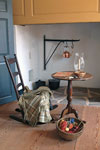
The installation in the Henry Melchior Muhlenberg Home attempts to
convey the period of the Muhlenbergs' lives there, and rooms are furnished
using materials from the collections to show what might have been in place
during the eighteenth century. Guests who have previously toured the
Muhlenberg Home should enjoy seeing the restored house more fully
furnished, giving it more the feeling of having been "lived in." This idea
of bringing the house to life is aided by labeling and wall texts that use
appropriate quotations from Reverend Muhlenberg's Journals to connect the
rooms and artifacts to events and descriptions of the Muhlenbergs'
occupancy of the house. A nice added touch to this theme of living is a
sort of scavenger hunt activity for younger visitors that asks them to
look for items that were used in the eighteenth century to carry out tasks
that are performed much differently in the twenty-first century or that
are now taken for granted.
While the entire installation succeeds nicely in wedding the
Muhlenberg Home with the Pennsylvania Folklife Collection, it is probably
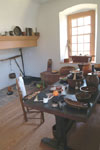
most successful in suggesting a sense of life in the kitchen exhibit. The
first room that one enters on the tour, the kitchen is the most completely
furnished room in the house and features pieces both small and large, from
iron utensils to wood box, that give one the feeling of activity in the
space. Given a full kitchen, visitors are left to imagine just how Mrs.
Muhlenberg fell into the fire, an event chronicled by her husband.
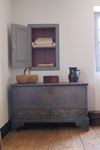
The other rooms in the house offer interesting pieces, such as a
1797 show towel and a large blanket chest that Ms. Minardi personally
feels is the prized piece of the exhibit. A rare item from the collection
is a reassembled swift used for taking up the yarn during wool processing.
This piece is part of a textile production display that includes helpful
descriptions and diagrams of eighteenth century fabric processing.
The second part of the collaboration between the Berman Museum and
the Historical Society of Trappe is installed at the Dewees Tavern, or
Dewees House. The installation of Pennsylvania Folklife items at Dewees,
which houses the permanent collections of the Historical Society, is
arranged generally by material of construction or type of object and
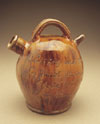
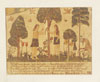
includes fraktur (which carries separate labeling), redware (including
pieces by Jacob Medinger, regarded as the last of the Pennsylvania German
potters before the current revival of the art), toleware, metalware,
chalkware, miniatures, toys, wood (especially an interesting selection of
butter molds), and ironwork.
In all, the exhibit of selections from the Pennsylvania Folklife
Collection displays over 300 pieces described in a useful combined catalog
for the two houses. The exhibition opened on May 11 and will run through
December 14, 2003 in Trappe, Pennsylvania.
|